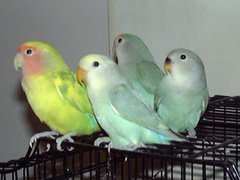
Chronic Egg Laying in Lovebirds

In general the process of laying eggs in love birds is related to many factors. They are day length, food availability, behavior of the mate, rain fall, competition for nesting sites etc. egg laying in love birds is more or less controlled by any one or more factors mentioned above.
Chronic egg laying in the long run will result in depletion of calcium as the egg shell’s major constituent is calcium. This depletion of calcium results in a condition called hypocalcaemia. As the result the contraction of the uterine muscle gets affected. The eggs are not effectively pushed out which results in egg binding. Hypocalcaemia can also cause seizures and weak bones. The weak bones are fractured easily, thus maiming the love birds for life. Hence, excess egg laying needs to be stopped for the health of the love birds.
In case you have two females and have eight eggs in the nest then it is normal. If you ten or more eggs in the nest, then there is need to bother as chronic egg laying problem may have set in. The love birds are over doing it which needs to be controlled else serious health issues will follow as mentioned earlier.
The first and fore most things one has to do are providing complete diet. This complete diet will prevent the birds from the possible health hazards that follow chronic egg laying. There are few things one can attempt to discourage the love bird from laying eggs let’s discuss out here.
Let the eggs be not removed from the nest. The love bird will sit on the eggs which will halt the egg laying. Leave the eggs as it is for 21 days or till the bird lose interest on them. You can also use fake eggs in place of original eggs. Fake eggs made of wood are available in crafty stores for this purpose. There is no danger of breakage in wooden eggs.
The nest making material and the nesting sites may be removed. The paper and other material which are used for nest making should be removed. Let the bird be away from enclosed and dark spaces. The love birds prefer dark space for laying eggs, if such space is not available, then the laying is delayed. Prevent the bird from finding the dark space themselves under the couch, behind washing machine etc by keeping close watch on them.
Mimic shorter days. Let there not be bright light in the bird area. The hour of darkness should be increased. Let the bird go to bed early that is at 6 pm. Long day is major triggering factor for laying. Don’t put on the light early in the morning. Let the bird get up late. Thus the days are made shorter artificially to discourage laying.
Let the access to the food be limited. Let the food not be available all the time for the birds. Remove the food plate after the break fast. Let the food bowl be back late after noon. This will discourage laying as the birds have the habit of laying when food is available in plenty. But care should be taken to keep the bird in right weight. The bird should not lose weight which will lead to other complications.


 Free Ads For Bloggers


