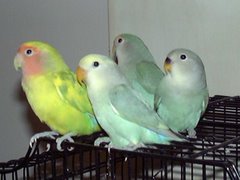
The Lovebirds

The Lovebirds
Perfect Pairs

Friday, December 5, 2025

Top ten monsoon management tips for pet birds

 Here are the Top 10 Monsoon Management Tips for Pet Birds, written in a clear, practical manner for everyday use:

1. Keep the Cage Warm & Dry

  • Monsoon weather is damp and chilly; birds can easily catch respiratory infections.

  • Place the cage in a warm, dry, draft-free location.

  • Avoid keeping birds near open windows during heavy rains.

2. Maintain Proper Cage Hygiene

  • High humidity increases fungal and bacterial growth.

  • Clean perches, trays, feeders and water bowls daily.

  • Disinfect the cage at least once a week.

3. Monitor for Respiratory Problems

  • Watch for signs like sneezing, nasal discharge, tail-bobbing, or wheezing.

  • Seek veterinary help immediately if symptoms appear.

4. Prevent Fungal Infections

  • Keep food storage areas dry; monsoon moisture can cause mold formation.

  • Offer only fresh seeds, pellets, fruits, and vegetables.

5. Ensure Adequate Sunlight Exposure

  • Natural sunlight is important for Vitamin D3.

  • When rains stop, allow 10–15 minutes of indirect sunlight (never harsh midday sun).

6. Control Mosquitoes & Pests

  • Mosquitoes thrive in monsoon and can transmit diseases.

  • Use mosquito nets around the cage; avoid strong chemical repellents or coils near birds.

7. Maintain Optimal Humidity Levels

  • Birds need moderate humidity, but excessive moisture is harmful.

  • Use a dehumidifier or good ventilation when humidity is too high indoors.

8. Provide Nutritious, Immune-Boosting Diet

  • Include leafy greens, sprouted grains, papaya, guava, and vitamin-rich foods.

  • Avoid cold or refrigerated foods during monsoon.

9. Keep the Cage Away from Damp Walls

  • Dampness promotes fungal spores and mite infestations.

  • Place the cage at least a few inches away from walls.

10. Ensure Safe Bathing Opportunities

  • Birds enjoy bathing, but avoid letting them get wet late in the evening.

  • Use lukewarm water; ensure they dry completely before cool temperatures set in.


Tuesday, November 25, 2025

Top ten winter management tips for pet birds


Here are ten essential winter management tips for keeping your pet birds healthy and comfortable during the colder months:

Temperature Control - Maintain a consistent room temperature between 65-75°F (18-24°C). Avoid placing cages near drafty windows, doors, or heating vents where temperature fluctuations can stress your bird.

Humidity Levels - Indoor heating dries the air significantly. Use a humidifier to keep humidity around 40-60%, which helps prevent respiratory issues and keeps feathers and skin healthy. You can also lightly mist your bird with lukewarm water a few times per week.

Lighting Schedule - Provide 10-12 hours of natural or full-spectrum light daily. Consider a timer for consistency, as shorter winter days can affect your bird's circadian rhythm and mood.

Nutrition Boost - Birds may need slightly more calories in winter if your home is cooler. Offer a balanced diet with fresh vegetables, quality pellets, and healthy seeds. Warm foods like cooked grains or vegetables can be comforting treats.

Bathing Opportunities - Continue offering baths but ensure the room is warm and draft-free. Some birds enjoy bathing in shallow warm water or being gently misted. Always allow them to dry completely in a warm area.

Monitor Behavior - Watch for signs of cold stress like fluffed feathers (when not sleeping), shivering, lethargy, or huddling. These indicate your bird needs a warmer environment.

Cover at Night - Use a breathable cage cover to retain warmth and create a cozy sleeping environment, but ensure adequate ventilation. Never use heavy blankets that restrict airflow.

Exercise and Enrichment - Birds may be less active in winter. Encourage movement with new toys, foraging activities, and supervised out-of-cage time to prevent boredom and maintain physical health.

Avoid Sudden Changes - Don't move birds between very warm and cold areas. If transporting your bird outside, use a carrier with insulated covers and warm it in your car beforehand.

Emergency Heating - Keep a heating pad (on low, wrapped in towels) or a safe bird-specific heating perch available for very cold nights or if your heating system fails. Always supervise heated accessories.

Your bird's specific needs may vary by species, so consult with an avian veterinarian if you have concerns about your particular bird's winter care.


Wednesday, March 29, 2023

Brooding in Lovebirds

 Brooding is a natural behavior exhibited by lovebirds, particularly the females, when they are preparing to lay eggs and incubate them. During this time, the female lovebird will spend long periods of time sitting on her eggs to keep them warm and ensure proper development. The male lovebird will often assist with the brooding process by bringing food to the female and taking turns sitting on the eggs.

Lovebirds typically lay between four to six eggs, which will hatch after approximately 23 days of incubation. During this time, the female will rarely leave the nest, and the male will continue to bring food and other materials to the nest to support the breeding pair.

It's important for lovebird owners to provide their pets with a suitable nesting box and a quiet, peaceful environment during the brooding period to ensure a successful hatching and healthy chicks.

Tuesday, March 14, 2023

Feeding Budgies...

  Here are some tips for feeding your budgerigars:

Provide a balanced diet

Budgerigars need a balanced diet that includes seeds, pellets, fruits, and vegetables. You can buy specially formulated bird food from a pet store or vet, which should meet their dietary requirements. However, it's essential to provide a varied diet to ensure they get all the necessary nutrients.
 

Avoid feeding them harmful foods: 

Budgerigars cannot eat all types of foods. You should avoid giving them foods such as chocolate, avocado, alcohol, caffeine, and any other toxic or harmful substances that can affect their health.
 

Give them fresh food daily

Fresh food is essential for your budgerigars' health, so make sure to provide fresh fruits and vegetables every day. Remove any uneaten food from their cage daily.

 Provide clean water 

Always ensure that your budgerigars have access to clean and fresh water. Change the water every day and clean the water dish regularly to prevent any bacterial or fungal growth.
 

Use feeding toys 

You can use feeding toys, such as hanging treats or food dispensers, to keep your budgerigars mentally stimulated while feeding them.

 Keep their feeding area clean 

Clean your budgerigar's feeding area regularly to prevent any bacterial or fungal growth. This will help keep them healthy and prevent any illnesses.

Monitor their weight 

It's essential to monitor your budgerigars' weight to ensure they are healthy. If you notice any sudden weight loss, consult your vet immediately.

Remember that providing your budgerigars with a healthy and balanced diet is crucial for their overall health and well-being.


Wednesday, December 4, 2013

Lovebird trick...

Nice video...


Monday, December 2, 2013

Lovebirds colony: How to Search the best one?


Straightly coming to the point, the only breeds that can't raise as lovebirds colony are Abyssinian Lovebirds ,and Madagascar Lovebirds. Yes!!! You can breed  Black Masked, Peach Faced, Nyasa, Fischer's for effective colony building.

You should bred in the aviaries as such 5 pairs per aviary. You should put a flock at a time. i.e. 5 pairs at a time rather than introducing pair by pair to form a colony. If you introduce the birds pair by pair, the dominant one will try to fight with other males and there is every possibility of death of the new comers.So, to build a lovebirds colony, it is always to raise a total number of birds at a point of time. ALL THE BEST!!!


Monday, March 25, 2013

Hygiene in lovebirds cage

If you keep and breed birds, hygiene is of utmost importance. That is why cages and aviaries need to be thoroughly cleaned on a regular basis. Just how often this needs to happen depends on the size of the cage or aviary, the number of birds living in it, the season, and the amount of droppings, waste food etc. To save costs, some people decide to sieve the ground cover of the cage or aviary, so that droppings and waste food are removed. Any invisible waste cannot, however, be removed by sieving, so that the risk of contamination remains. When you clean the ground cover of the cage, shed, or night house, you should remove the entire layer and replace it with a completely new one. The type of ground cover you should use will depend on the species of bird you keep. The best-known and most frequently used type of ground cover is shell sand, but wood chips, clean river sand and even pebbles are sometimes also used as a ground cover.

The walls, bars, and the floor of the cage or aviary should be disinfected on a regular basis. You can buy safe-cleaning agents from the pet shops. Perches, troughs, and baths should also be scrubbed out regularly with a disinfectant. The more hygienically you set about this, the less likely you are to be confronted with problems.

Sunday, March 24, 2013

Closed Ring in Lovebirds

Congratulations!!! At last you have purchased a healthy lovebird. The next thing you should look at is their closed ring. All young birds born in captivity at a breeder’s wear a closed ring showing, among other things the year in which they were born.

A closed rings hold not be confused with a tag, which can be put on the leg of an adult bird to help identify it among other similar birds of the same species. If the bird is not wearing a closed ring, then it might have been imported (illegally) or caught illegally.

You should be particularly wary if the bird you are being offered belongs to a protected species or a species that is subjected to legal restrictions with respect to how the bird should be kept and ownership transferred to others and is not wearing a closed ring.

A missing closed ring does not always automatically means that something illegal is going on. If the breeder is not a member of a bird association, ten he will not be able to get these rings for his lovebirds. In such cases, it usually means that the bird was bred by a hobbyist or by accident.

In exceptional cases, it sometimes happens that the young birds have grown too fast, as a result of which it is no longer possible to fit them closed rings without actually hurting them. You should nevertheless be particularly careful if the bird is not wearing a closed ring.

Tuesday, January 15, 2013

Why do lovebirds pull out there feathers?


f you do perform lovebirds care really, you should know why do lovebirds pull out there feathers. Pulling feathers, one by one, and watching them float to the bottom of the cage can be fun to do if there is nothing. The reasons for feather plucking varies from maturity, abuse and neglect, dietary deficiency, boredom or lack of stimulus, changes or emotional upset, over grooming by mate, habit or medical problems (fungal or mold growths).

Lovebirds are playful by nature and it loves to follow you around on your shoulder. So it your duty to take care of your lovebirds perfectly. The most possible remedy to correct this anomaly is to determine the cause for feather plucking. The best way to prevent feather-plucking and to keep those beautiful feathers on your bird, is to provide your pet with plenty of exercise, entertainment and companionship. If it is a habit, it is mandatory to provide a mate to over coming this behavior. If it is due to hormonal change, which will be usually noticed during maturity. If the skin plucking is progressive and the skin started showing open pores, this is the high time to seek an appointment form your avian vet.

Sunday, January 13, 2013

What to do when my incubating lovebird died?

This is a rare occasion. But the owners who are performing lovebirds care should know what to do when their incubating lovebird died due to any disease or any untoward incident. Sometimes, the lovebirds won’t sit on the clutch due to some external influence like noise from construction, etc.

You can switch the eggs from one nest to another nest within the cage to get young ones. Even you can place the lovebirds egg in cockatiels nest until both birds feed their young the same way, it should work. Just take the eggs from the lovebirds and quickly switch them with the cockatiels, then leave the room so you don't scare them. If not, it was worth a try.


Photo courtesy: http://www.kariyerdunyam.com: 


Saturday, January 5, 2013

Will canary pox affects Lovebird?

Canary pox is a dreadful disease because the affected lovebirds will show 80% mortality. Some may get escaped from the disease but may act as carrier during lifetime.

The symptoms of canary pox in lovebirds include skin lesions around featherless areas of the head, particularly the eyelids. Small nodules and scabs may be seen which in severe cases may result in a lot of swelling and inflammation.

The virus needs a break in healthy skin to start an infection; this may be a small wound or the result of some insect bite where the insect can transmit the infection from bird to bird. Insect transmission is probably a major factor for birds in outdoor aviaries.

In most cases, these cutaneous forms of pox are self-limiting and the birds will recover with only some residual scarring. There is also a more aggressive form of the disease which involves the upper respiratory tract; in these cases the infection may result in the death of the bird due to swelling and inflammation of the breathing passages.

Treatment can be performed by vaccination against pox, which is readily available in the open market.

Tuesday, January 1, 2013

How to transport my lovebird to Vet’s office?

It all depends on the climate of your area. If you’re in cold climate, taking your lovebirds to the vet by cage is not advisable. The best way to carry your lovebirds is to put her in a big tupper ware container with a towel inside. If you are walking there I would also put a towel over it as well. Make sure you poke some holes over the tubberware for air.

If it is warm, you can carry the cage as an outing trip where she could see what is going on could be fun, so you could try that.

You may ask is it safe to have 3 lovebirds in the same container at once?

Yes!!! Provided all of them are already friendly in nature.

Points to ponder while transporting lovebirds


  • Keep her quiet (a darkened or dim transport carrier helps there)
  • Don't make her too excited (a small area is best then)


You should have two primary transport cages- one type- small animal carrier- like for a small cat- line the bottom with paper towel and let her be- but for the small birds like lovebirds, budgies and finches, your first choice should be a small wire carrier that is designed for tinies- the bottom is solid but the sides and top are wire- Please do cover the little cages with a towel

The next best thing is making use of a small cardboard box- at this time of year I would only use a couple of tiny holes- obviously in the summer I'd use more.

Make all transport cages with paper towelling (it gives vets a quick way to check poop too) and avoid extra time in the car (it is stressful)

Saturday, December 29, 2012

Train your lovebird to be a good companion

A lovebird is really a cute, loving, and fun companion for just any bird lover. It lives for conversation with people and its fellow birds. The lovebirds aren't, however, without their own faults. In fact several are known to be quite opposing for their endearing name. In case you do not provide enough training of love bird, they will frequently become temperamental as well as develop behavioral issues. It is essential that you should spend ample of your time with such kind of bird. Proper training of love bird will make sure using a lovebird that likes to spend time along with you. Here are a few common problems associated with Love birds, along with some ideas for getting rid of them.

Some species of lovebirds tend to be more vocal than others, but all makes some noise. This is particularly true in the early mornings, evenings, or when the bird is actually excited. If the love bird’s needs are satisfied and you will find no signs of underlying health issues, the screeching is most likely an effort to get attracted. And while you should give your lovebird lots of attention, you can’t be anticipated to spend every day playing with it. Training your lovebird politely is an effective method to combat this issue.
When your lovebird screams, don’t give it any positive or negative signs. Try not to look at it, and go away from the room if you are able to. Return when it's become quiet, and provide attention when it does anything much more positive. Many lovebirds don't talk, so you might have to settle with whistling, wing flapping, or a technique.

Whenever a lovebird plucks its feathers, it might be having a health related issue that needs instant medical attention. It’s better to take a plucking bird to the vet, just to remain on the safe side. If you do not find any such medical problems, the plucking may be probably due to any kind of emotional problem. Lovebirds may often pluck once they are not getting the required attention. Training your bird more regularly might solve this type of issue. Love bird training begins with you making the dedication for your lovebird.
A gnaw from the lovebird is less painful than that of a large bird. Nevertheless, it is an undesirable behavior and really must be treated accordingly. If there have been no activities which cause the lovebird to fear, he may end up being using biting to obtain what he desires.

A quick nip will get your interest, right? Consider the situation under which your bird bites can help you determine about training the lovebird. Do not respond to the bite by shouting and tugging away - this can only strengthen the actual behavior. Instead, stay quiet and drive your hand towards the bird. Once the bird doesn’t get a response, he'll understand that it serves no purpose. Training a lovebird may be very rewarding when the training steps are adopted.

Friday, December 28, 2012

Opaline lovebirds: A worthy choice for your pet


Opaline is really a new mutation among the peach-face love birds. It had been discovered in 1997. There have been number of mutations within peach-face love birds formerly, but they were all created by new color combinations apart from the pied mutation, that produces an uneven colored pattern on the bird. The colors are on the opaline lovebirds in the predictable though a new pattern. Therefore, it's known as a "pattern" mutation. Opaline lovebird mutations are also present in other birds, but this specific opaline mutation is particularly interesting as it is the first found in a non-Australian bird. It's a classic incident in the history of aviculture.

The opaline lovebirds tend to be little bundles of happiness. They have the entire personality of birds and also convenient to keep as pets for their size. The lovebirds are miniature clowns, singing for hours at any time. They like to hang from toys or dance upon your shoulder. You have to watch your shirt buttons! They like to pull them away from your clothes!

Lots of people believe lovebirds should be kept as couples. This is not true. A single lovebird makes a much better pet as it bonds for you rather than to a different lovebird. While you can easily keep a set of lovebirds tame, but if you plan on spending plenty of time with your bird you may keep it on it single. Nevertheless, if you work extended hours and don't know whether you would have considerable time for your lovebird, it is suggested that you provide him/her a friend. This would keep the lovebirds cheerful and stop boredom. It is essential to understand that though lovebirds really are a small bird, they have the similar intelligence and abilities like a few of the larger birds. They will never cease amazing you using their ability to flee from their very own cages. You need to put a copper wire on the doors to have them in, though occasionally they learn how to unwind the cable and open the doorway! At times lovebirds will attempt to be the tiny bosses of the household. It is recommended that you use the same type of gentle dominance training which's used for bigger birds.

Are you buying bird that you are able to teach to speak? Lovebirds may learn how to mimic sounds and speech sometimes. However, it is generally not advised that you buy some species only due to the expectation that it'll speak. Thus, if that's your only reason behind buying a lovebird, then you should definitely reconsider as the bird could become abandoned due to your disappointment. In general estimation, opaline lovebirds help to make good pets even though they do not speak a word. The lovebirds screech all day long; never producing an audio that anyone may understand, except to be simply 'noisy chat’.  They will provide you entertainment for hours. If you choose to buy an opaline lovebird for a pet, you definitely have made an outstanding choice!

Thursday, December 27, 2012

Things to consider while getting a love bird cage

Love birds may be magnificent pets and like any other pet they might need suitable housing. Bird cages are simply cages for maintaining pet birds though there are specific factors that should be taken into account before buying the cage. Size of the lovebird cage is an essential criterion. It should offer adequate space for the birds so that they can walk around or flap their wings easily.

Keep in mind that there are things like perches, toys and bowls which have to be added in the lovebird cage and all of them take up much room.

The kind of bird you've would decide how big cage necessary, large birds will evidently need a much larger cage than the usual budgie. If the love bird cage you choose on is too small it may cause significant stress upon your pet lovebird resulting in a number of very uncomfortable problems. These can sometimes make your pet bird taking out its own feathers or even becoming noisy and gloomy.

The love bird cage you buy must be of top quality, it must not have any sharp edges or parts that may come loose. It is more preferable to buy a cage that won't rust, is simple to clean and is non-toxic in nature. Quality bird cages produced from stainless steel are the ideal choice and would not really chip. As the bird cage might need cleaning regularly, make sure that it possesses a detachable grid on the bottom for accumulating bird droppings.

The form of a love bird cage might have more of the psychological influence on your pet than you understand. There’s some debate regarding this subject but a few vets think that circular cages a not really a good option. This is due to the fact that some designs may restrict the quantity of usable space the pet bird has.

Many birds desire to be at eye degree with people thus giving them much more opportunities for interaction. A bird cage stand may provide them this benefit. A proper cage stand prevents your lovebird from feeling lonely as well as offers it with better ventilation. Moreover, if your lovebirds love getting together with people, they can certainly do so in a more comfortable way. Keeping the cage on the ground may expose your own birds to many dangers. By getting a stand, you can designate a specific place within your home that will permanently accommodate the bird cage.

You need to possess a lovebird cage which has got sufficient space for a variety of other items to maintain your pet lovebird joyful and amused. It is essential to possess a variety of playthings including a swing for the bird, and it's also important to have a few perches, food as well as water bowls. It is a good idea to visit the veterinarian because they will be able to recommend you on any requirements which are desirable for the specific bird you'll need a love bird cage for. There are veterinarians who focus on bird care and also they are loaded with information.

Wednesday, December 26, 2012

All you need to know about lovebirds

Whenever you are raising lovebirds as your pets, it is quite natural you already know a few of the lovebird information regarding these adorable creatures prior to getting them. But the thing is you might not really completely understand sufficient lovebird information that will assist in caring for the lovebirds. There are nine types of the lovebird, one from Madagascar while eight others from the African continent. They may grow up to seven inches long and live for many years.

Choosing to consider a couple of these lovebirds would depend on the type of lifestyle you lead. Buying two birds would allow for a better investment in your part, as they would each have companionship with the other, thus fulfilling their urge to interact. Though, if there's something that might concern you, it will be the expense. If you think that you'll be spending a whole fortune, you must honestly think about whether getting a lovebird will be a good choice for you.

Favorably, lovebird owners ought to know supplementary lovebird information. You must understand the character of the bird and its behavior. They're playful, loving as well as intellectual. With adequate socialization and good care, lovebirds may develop strong connections or interaction with their owner. To help to make these birds much more sociable and much less aggressive, experts suggest that caretakers should obtain a pair for their lonely pet. They might also give playthings or toys. To know about the character of lovebirds, gather more lovebird information, like their colors and mutations. The African lovebird has about nine species including the Madagascar lovebird, Masked, Peach faced, Abyssinian, Fischer's, Nyasa, black-cheeked and red-faced lovebird.

Each one of the species exhibits diverse markings and colors. The most ordinary may be the Peach-faced with its green, blue and yellow-colored body accentuated having a bright rush of peach near the head. Mutation of color, that are widely popular amongst lovebird enthusiasts, are also done on some species such as the peach-faced lovebirds basic piece of lovebird information that caretakers should bear in mind is their food habits. Just as other pet animals, they can't live without food or water. They must be fed on the high-quality diet such as pellets, to be alternated with various vegetables and fruit, mainly the green vegetables.
Here is really very helpful lovebird information that lovebirds require sufficient exercise. They must be given enough space for climbing and flying. Therefore, you should know you need to have significant room in the cage for all of them. They like to munch and you will support a type of exercise for them of this nature.

You may supply toys or wood so that they are able to exercise their jaw's muscle. These friendly little birds are actually thrilling and attention-grabbing. These traits make them extremely popular in the world of birds and amongst pet lovers. To include more to these lovebird information, remember that these birds require regular socialization. They may become aggressive when inappropriately looked after.

Monday, December 3, 2012

Naming a love bird depend on its nature...


It’s all within the name! Simply put Lovebirds tend to be more likely than not likely to love you and obtain very attached to you. While this is a good thing it could be taken too much. Firstly, you should choose some cute love bird names. Giving a name to your pet will be thrilling and confusing at the same moment. To some bird owners, this part is as simple as eating cake. For others however, getting a love bird name may be as difficult as solving a math. It is quite necessary for the birds to get accustomed to their names. You may call them Harry and Julie. 

One of the most typical problems owners face with their lovebirds is commonly him getting temperamental when you do not give the interest he thinks he should get, or potentially the attention he's been receiving till now.

There is a good debate taking place on the topic whether Lovebirds should end up being purchased as a couple or as single. A few experts say that pairing lovebirds may detract from relationships with human, whereas others say that some Love Birds when paired can immediately turn one another on. While the question continues to be unanswered, the general opinion is that lovebirds help to make great pets. They're in the parrot family and therefore are considered quite smart, active, entertaining and extremely social pets. It is said that they need regular attention to keep them secure because of their tiny size.

Another essential fact is that since they're very inquisitive and incredibly active, they are susceptible to accidents. For instance, when they drink water, they play in their water bowls, and when let from the cage, can be drowned in the bathroom or toilet. They also prefer to explore enclosed places in your house, mostly drawers or other closet which might be ajar. In truth, Love Birds generally die from accidents in your home than by falling ill.

Bonding with the person is an additional feature of Lovebirds which may also be harmful to their own health. They may sit near you and you don’t realize they're there, and by mistake sit on them. Or they might be following you round the house and can certainly be stepped upon.

So it is essential to train your lovebird from developing manners that could ultimately hurt them. Training them will prevent bad habits like biting. Attention to the lovebird should be provided daily in order to bond with the owner.

These birds especially love cradling and cuddling, but it's also wise to be aware they are able to just as easily cuddle into your clothes which doesn't bode well on their behalf.

I recommend not naming your love birds until you meet it. You may make a list of names if you want, especially the names you like for birds. Do not pick one love bird name, although you may have a favorite, until the lovebird actually arrives. You will have to understand your lovebird's personality steadily, over some days, and then choose your love bird name! This actually is the best way to start.

Sunday, November 4, 2012

Lovebird Diet - Points to ponder


 Love bird diet need a variety of food to keep them healthy. Yes!!! A proper lovebird diet consists of greens especially mint and coriander leaves. Apart from this, lovebirds need formulated parrot pellets, cocktail seed mix, vegetables and fresh fruits. You can provide sprouted meals of broccoli, bean, alfalfa that is available from the supermarket.

      You should provide adequate water twice daily after removing the contaminated water bowls. Try to provide fresh lovebird diet to them. You can get more details about lovebird diet here...

Monday, July 30, 2012

Baby Lovebirds Caring Tips


Congratulations!!! So your lovebird is nesting now. Then, this is high time to get to know about baby lovebirds caring tips. If you haven’t cared your baby lovebirds well, you’ll lose them that could be a discouraging experience.

Once you notice the baby lovebirds coming out of the nest, this is the time you should intervene. If you allow the baby birds along with the parents more than couple of weeks, the male bird will try to peck these little birds. Remove them and rear the young ones in a sizable plastic-type reptile container for first few weeks.

You should pull out the entire clutch at 10 days old; if you want them to hand rear. Feed the infant birds with syringes along with provision of adult food such as millets and greens. Fill the syringes half way with baby lovebird liquid feed. You should pull the syringe out about 3-5 seconds of feeding. Wipe the beak with a tissue paper or soft cloth, then again start feeding. Stop feeding once you feel that the crop is full. You should place the hand-held syringe on the RIGHT side of the beak to push the feed on left side, otherwise the bird will get choke.


Initially hand feed your bird with guidance from an experienced trainer. You can buy baby bird formula available commercially.

As we know very well that the baby birds are fed with regurgitated food by its mother in nature, you should provide them with warm food (103 F). Check the food thoroughly after warm up in order to avoid hot spots and stuff like that. If the food is too warm and fed the baby lovebirds unnoticed, then there is possibility of CROP BURN.

If the baby birds stop wanting the syringes, this clearly shows that they are completely independent. Now you can sell them to any other owner after completely examining that there are no health issues. 

Thursday, July 26, 2012

Tips for successful lovebirds breeding


A healthy lovebird is a good breeder in near future. Hence it is mandatory to improve the health of your lovebirds in your cage. Here the few steps that will help you to maximize the breeding potentiality of your lovebirds.

Age of breeding

 As a lovebird’s breeder, you should know the age of your lovebird. The lovebird between 1 and 5 years old is suitable for breeding. The sex ratio should be 1 male for 5 females.

Nest boxes

Nest box plays an important role in breeding lovebirds. Nest box should be of 12 inches x 12 inches x 12 inches. The entrance hole in the nest box should be of 3 inches diameter.


Nutritional care

During breeding season, you should feed the lovebirds with fresh fruits, vegetables, and greens (Coriander leaves).  Supplementation with calcium is essential for the hens that are going to lay eggs.

Sexing of lovebirds

Do you know lovebirds are sexually monomorphic? It is very difficult to differentiate male and female as the species look alike. DNA sexing is the only way to ascertain the sex of the bird.

Laying of eggs

Female lovebirds will lay at least 3 to 7 eggs on alternate days.  In general, they will lay eggs after 5-7 days of mating.

Period of Incubation

Lovebirds will incubate the eggs for 23 days. You should calculate the days of incubation start from the day on which the hen sits on the egg continuously

Hatchling care

Both sexes will take part in hatchling rising by feeding the chicks daily. Extra feed such as green food and soaked seeds (millets) are of best choice. In general chicks will come out of the nest box at the age of six weeks. No chicks will remain in the nest box after eight weeks of age. The young ones will make use of nest box for night stay for two more weeks. You should keep in mind that once the young one learned to feed independently, it should be move on to another cage, otherwise the male will try to kill the offspring.