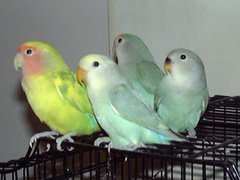
The Lovebirds

The Lovebirds
Perfect Pairs

Thursday, April 23, 2009

Things To Avoid Feeding Lovebirds

You should not feed your lovebirds with rhubarb, avocado and chocolate. In addition to this, you should not provide any beverages containing alcohol or caffeine. Some of the lovebird owners are ready to give foods rich in monosodium glutamate (MSG), sulfites, nitrites, or nitrates. Avoid feeding processed meat also! Apple seeds, fruit pits, fava and navy beans, sprouted lima, and onions should not be given as a feeding stuff.


It is always advisable to avoid any foods high in sugar, salt or fat and junk foods. Lovebirds are suffering from lactose intolerant, so milk and milk products should be avoided. But you can give little quantity of yogurt and hard cheese.

As a prestigious lovebird owner, I can give a valuable suggestion to avoid feeding peanuts in the shell as they might be contaminated with Aspergillus fungus - a precursor for respiratory distress. This fungus produces a toxin called aflatoxin, which will damage the liver. Good quality human grade peanuts are advisable to feed the lovebirds than a mold infected peanuts. Blanched (unsalted) and shelled peanut are highly advisable.

What is The Best Feed For Lovebirds?

All food with no signs of mold are highly appreciated to feed the lovebirds because feeding plays an important role in lovebirds care. All the Best!!!

Thursday, April 16, 2009

How To Deal Broken Bones In Lovebirds?

Spontaneous veterinary intervention is needed when your lovebird get injured leg or wing by crashing into a wall. Place your lovebird in makeshift brooder, which is the most comfortable place for a broken bone lovebirds.

Don't allow any frightened lovebird to fly freely within your home. This will lead to get injured his/her wings or legs. Then it would be permanent injury. Sometimes, these lovebirds will injure their neck, which will ultimately lead to death of the lovebird - hemorrhage in the brain.

Broken leg bones are really challenging task for a vet because these lovebirds will always try to remove the cast by pecking through out their daytime.

Do perform a regular visit your vet's office until the leg heals completely. Don't ignore the possible broken bone in lovebirds!!! Otherwise, this condition will cause a permanent injury to your lovebird. Hence lovebirds care during this period is important to avoid improper set of leg bones as well as permanent, crippling effect.

Monday, March 30, 2009

Lovebirds Diet - What it prefers much?

Lovebirds care is an important aspect of keeping your Lovebirds safe. As a Lovebird owner, you should know what a lovebird will love to eat and also what should you to provide them?

Lovebirds should be provided with a good basic seed mix or pellet food, in addition to fresh fruits or veggies and fresh water. Don't give only seeds to eat!

do you know the lovebirds lifespan purely depends on its food? So, you should provide a clean and healthy food for this cute little lovebirds.

Good care and balanced diet will make your pet lovebird a shiny and bright bird.

Saturday, February 28, 2009

Courting Behavior of Lovebirds

Have you ever noticed the courting behavior of lovebirds? It is very rare. They will stick their noses in every other bird's business without hesitation. Normally the female lovebird opened its wing wide apart and raised its tail. It will scratch its beak with its leg. Then the male will mount on it.

If both of them will be same sex. The female behavior will be exhibited by both of them.

Saturday, January 31, 2009

When to Consult your Avian Vet?

As a lovebird owner, you should know when to fix an appointment with your avian vet. Hence I have pooled some of the important disease symptoms of lovebirds below. If you have noticed any of the symptoms, you ought to contact your vet immediately-

1. head, tail or wings drooping
2. vent soiling
3. More thirst, which will lead more water consumption
4. disorientation
5. Change in normal activities- Preening playing with toys, different perching areas etc.
6. abnormal sleep pattern
7. Picking of feathers or falling of feathers in excess amount
8. Untidy and fluffed up appearance
9. Head circling
10. Loss of appetite