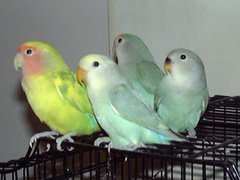
Things to Think Before Breeding Lovebirds
Congratulations for your decision of breeding lovebirds!!! Do you know there a few sets of things to think before proceeding so? Here I have given few limitations for breeding lovebirds, which you should keep in mind before performing this act of labor of love.
- Ask yourself if you really want to breed lovebirds. If so, fix a goal and ascertain what you’re going to do with the hatch chicks,
- Choose before breeding how many would you want to keep.
- Work out properly if you want to perform cross breeding to get color mutations.
- This act of breeding is really expensive. So don’t breed them for money.
- Pairing of lovebirds should be done before mixing them together. This can be done by feather and blood DNA testing services.
- Don’t believe on natural pairings as both females may also get paired up and there is every possibility of producing infertile eggs.
- Breed them at right age. Say, 10 months old for both male and female is perfect.
- Restrict breeding lovebirds in the warm months of the year as they need a high humid environment in the nest during incubation.
- Base of the nest box should be filled with damp organic debris – Bark of trees, pieces of straw, etc.
- Try to allow parent Lovebirds feed their young for two to three weeks. Then you can hand-feed the young one for successful rearing.
All the best!!!


 Free Ads For Bloggers


