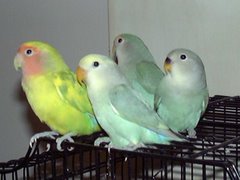
The Lovebirds

The Lovebirds
Perfect Pairs

Friday, March 4, 2011

Psittacosis in Lovebirds

Once you made up your mind to purchase a pair of lovebirds to your home, equip yourself with enough knowledge about lovebirds care. Do you know lovebirds are prone for Psittacosis? Yes!!! It is a respiratory infection that will affect human beings also!

So, you should seek an appointment with your vet for a check-up some-time within the first week of purchase. He will do aoutine testing for psittacosis. It is always good to discuss this matter with your vet shortly after purchase. Fortunately, this is uncommon in lovebirds.

Symptoms

The psittacosis is technically called as Chlamydiosis. The common symptoms include

  • Weakness
  • "Fluffed up" appearance
  • Lethargy
  • Loss of Appetite
  • Diarrhoea
  • Laboured breathing
  • Eye discharge or swelling
Treatment

The best drug of choice for this condition is antibiotic doxycycline, however some newer drugs are also proving of value. But it is mandatory to discuss this matter with your vet to get final opinion about thsis dreadful disease. Although it is uncommon in lovebirds, there is every possibility of outbreak of psittacosis among your flock of lovebirds. Hence the lovebirds care against psittacosis is mandatory.


Monday, February 21, 2011

Lovebirds Healthy Food List

So, you have started to build cage for your ensuing lovebirds. Congrats!!! This is the high time to get to know about the lovebirds healthy food list to keep them hale and healthy. Although there are so many feed items available for lovebirds, you should know what are the items that will keep your lovebirds healthy.

Here is the list-

Perfect Fruit List

1. papaya
2. melons
3. peach
4. pear
5.banana
6.kiwi
7.apples

N.B: Avoid Avacodos, as they are very poisonous to lovebirds.

Whole Grains

  1. barley
  2. oats
  3. whole wheat, and whole rice,
  4. sprouts
  5. weeds

Seeds

  1. Sunflower seeds
  2. Sesame seeds
  3. Beans
N.B: Avoid Navy bean and Lima- Highly toxic in nature

Please check the items carefully and choose the available stuffs to keep your lovebirds healthy in captivity. All the best!!!

Sunday, February 20, 2011

Fatty Liver Syndrome in Lovebirds

This is also called as hepatic lipidosis. This disease is a slow process occuring in your lovebird which made the liver tissue to get replaced with fat. The lovebird may suddenly fall sick as the fatty liver syndrome in lovebirds has progressed.

Female lovebirds are more prone to this disease which is due to the hormonal activities in the reproductive hen. Even young ones also being reported with this condition

CAUSES

  • Too frequent feeding or Over eating
  • Providing high fat content diet -all-seed diet
  • Nutritious deficiencies- Choline, Methionine and Biotin
  • Diabetes mellitus

SYMPTOMS of Fatty Liver Syndrome

  • Overgrown beaks and claws
  • Dry itchy Skin
  • Change in feather coloration - Poor feather quality
  • Greenish diarrhea due to biliverdin being excreted
  • Distended abdomen with the appearance of overgrown liver just below the keel
  • Dyspnea- Difficulty in breathing
  • In terminal stages, seizures are noticed

Prevention of Fatty Liver Syndrome

  • Provision of low-fat diet like fresh fruits and veggies and high quality pellets
  • Supplementation with Dimethylglycine (DMG), a perfect anti-oxidant
  • Administration of lactulose - to treat or prevent central nervous system signs
  • Fresh gel from the Aloe vera leaves may be prepared to administer the lovebirds

Fatty liver syndrome is a dreadful condition. In other words, it is difficult to cure. That's why we have to concentrate on preventing the Fatty Liver Syndrome well in advance by the lovebirds owner.

Wednesday, December 29, 2010

Things to Think Before Breeding Lovebirds

Congratulations for your decision of breeding lovebirds!!! Do you know there a few sets of things to think before proceeding so? Here I have given few limitations for breeding lovebirds, which you should keep in mind before performing this act of labor of love.

  1. Ask yourself if you really want to breed lovebirds. If so, fix a goal and ascertain what you’re going to do with the hatch chicks,
  2. Choose before breeding how many would you want to keep.
  3. Work out properly if you want to perform cross breeding to get color mutations.
  4. This act of breeding is really expensive. So don’t breed them for money.
  5. Pairing of lovebirds should be done before mixing them together. This can be done by feather and blood DNA testing services.
  6. Don’t believe on natural pairings as both females may also get paired up and there is every possibility of producing infertile eggs.
  7. Breed them at right age. Say, 10 months old for both male and female is perfect.
  8. Restrict breeding lovebirds in the warm months of the year as they need a high humid environment in the nest during incubation.
  9. Base of the nest box should be filled with damp organic debris – Bark of trees, pieces of straw, etc.
  10. Try to allow parent Lovebirds feed their young for two to three weeks. Then you can hand-feed the young one for successful rearing.

All the best!!!

Monday, December 27, 2010

Tantrums of Lovebirds

The common tantrum observed with most of the lovebirds is Screaming. The lovebird will scream only when a particular owner is present in his room.

Most of the owners try different methods to avoid screaming. Even one of my client asked is it possible to train her lovebirds. No need to train your lovebird. There is a simple way to treat this lovebird tantrum.

The best way is to get out of the room when the lovebird is screaming. Now he will learn that if he wants to be around you he has to be at least reasonably quiet. He remembers it doesn't work in a few seconds and fluffs up all cute and blows kisses and flirts which you find much harder to ignore.
Hope this works for you...
