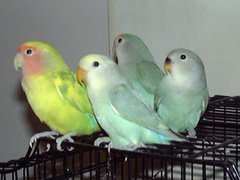
Train your lovebird to be a good companion
A lovebird is really a cute, loving, and fun companion for just any bird lover. It lives for conversation with people and its fellow birds. The lovebirds aren't, however, without their own faults. In fact several are known to be quite opposing for their endearing name. In case you do not provide enough training of love bird, they will frequently become temperamental as well as develop behavioral issues. It is essential that you should spend ample of your time with such kind of bird. Proper training of love bird will make sure using a lovebird that likes to spend time along with you. Here are a few common problems associated with Love birds, along with some ideas for getting rid of them.
Some species of lovebirds tend to be more vocal than others, but all makes some noise. This is particularly true in the early mornings, evenings, or when the bird is actually excited. If the love bird’s needs are satisfied and you will find no signs of underlying health issues, the screeching is most likely an effort to get attracted. And while you should give your lovebird lots of attention, you can’t be anticipated to spend every day playing with it. Training your lovebird politely is an effective method to combat this issue.
When your lovebird screams, don’t give it any positive or negative signs. Try not to look at it, and go away from the room if you are able to. Return when it's become quiet, and provide attention when it does anything much more positive. Many lovebirds don't talk, so you might have to settle with whistling, wing flapping, or a technique.
Whenever a lovebird plucks its feathers, it might be having a health related issue that needs instant medical attention. It’s better to take a plucking bird to the vet, just to remain on the safe side. If you do not find any such medical problems, the plucking may be probably due to any kind of emotional problem. Lovebirds may often pluck once they are not getting the required attention. Training your bird more regularly might solve this type of issue. Love bird training begins with you making the dedication for your lovebird.
A gnaw from the lovebird is less painful than that of a large bird. Nevertheless, it is an undesirable behavior and really must be treated accordingly. If there have been no activities which cause the lovebird to fear, he may end up being using biting to obtain what he desires.
A quick nip will get your interest, right? Consider the situation under which your bird bites can help you determine about training the lovebird. Do not respond to the bite by shouting and tugging away - this can only strengthen the actual behavior. Instead, stay quiet and drive your hand towards the bird. Once the bird doesn’t get a response, he'll understand that it serves no purpose. Training a lovebird may be very rewarding when the training steps are adopted.





 Free Ads For Bloggers


